First half of 28 Days Later.
In the first half of '28 Days Later', Selina, the main woman in this horror, is portrayed as a cold-hearted independent women, doing whatever necessary in order to survive - even killing her eventual boyfriend in a heartbeat. Selina has control in the first half, dictating order. She is covered up with short hair, showing a possession of male characteristics.
However, in the second half of the movie, as feelings develop for Jim, we see Selina transition into more of a woman. In this part, traditional stereotypes for women are enforced, seeing Selina saved by Jim multiple times. We also see her cry for the first time, showing how she has become a stereotypical woman.
Tuesday, 24 September 2013

Traditional Representation of Women in Horror
Horror movies have been criticized for stereotyping women. They are traditionally represented as either pure or virginal, such as the first bite in Dracula, where he is seen to be fiending for the innocent girl, covered in white.
This is common in horror movies, where women are often portrayed for men's desire.In '28 days later' we find out in the second half of the movie, about the soldiers' ulterior motives. This links in with Laura Mulvey's Gaze theory, where she states that ''women are positioned to be the objects of male gaze.''
It is also common in the horror genre, for men to save women. The men traditionally either being the psychotic monster on a killing rampage, or a hero who comes to their rescue.
In teen slashers, it is usually common for a teenage girl to die after committing the stereotypical teen act, such as drinking, smoking, or having sex. In Scream for example, the character of Tatum Riley is killed by Ghostface, as she goes to the garage to get more beers.
The 'Final Girl' is also common and this is usually the character who hasn't drank, or committed any sinful acts. Laurie in Halloween, Alice in Friday the 13th are all examples of this.
In Prom Night, the film opens with the main girl ending up as 'the final girl'. The film is unique in a way that, the film opens and ends in a similar way, with the girl being the only sole survivor in the whole movie.
This is common in horror movies, where women are often portrayed for men's desire.In '28 days later' we find out in the second half of the movie, about the soldiers' ulterior motives. This links in with Laura Mulvey's Gaze theory, where she states that ''women are positioned to be the objects of male gaze.''
It is also common in the horror genre, for men to save women. The men traditionally either being the psychotic monster on a killing rampage, or a hero who comes to their rescue.
In teen slashers, it is usually common for a teenage girl to die after committing the stereotypical teen act, such as drinking, smoking, or having sex. In Scream for example, the character of Tatum Riley is killed by Ghostface, as she goes to the garage to get more beers.
The 'Final Girl' is also common and this is usually the character who hasn't drank, or committed any sinful acts. Laurie in Halloween, Alice in Friday the 13th are all examples of this.
In Prom Night, the film opens with the main girl ending up as 'the final girl'. The film is unique in a way that, the film opens and ends in a similar way, with the girl being the only sole survivor in the whole movie.
Monday, 23 September 2013
Disabled People in The Media
Disability in the media normally comes with pity and sympathy. Below are some statistics from the Disabled Rights UK, and they surveyed disabled people and their thoughts of how they are portrayed in the media.
Over three quarters (77%) could cite negative press articles about disabled people; only a third (35%) a positive story;
94% suggested press portrayal of disability equality issues was ‘unfair’ and 76% said the volume of negativity was ‘significantly increasing’;
91% said there was a link between negative press portrayal of disabled people and rising hostility/hate crime;
Nearly half (42%) suggested the government was responsible for rising press negativity and hostility towards disabled people.
 Artie from Glee is an example of this. Kevin McHale plays the role of Artie in the hit US show Glee. Kevin is a perfectly able actor, yet he was casted to play in a paraplegic role. Disabled activists have protested since the pilot episode, and in episodes such as 'wheels' and 'Laryngitis', the disabled have complained the portrayel of Artie 'is offensive,appropriative and wildly inaccurate.'

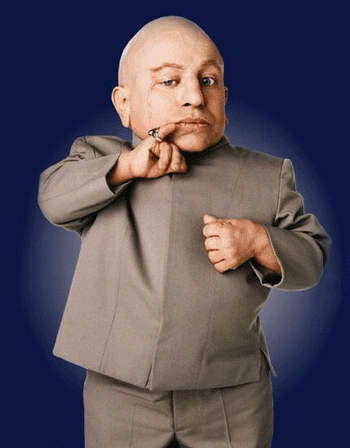 With this being said, that is not to say that there has been a change in stereotypes. In Employee of the Month, Danny Woodburn has Dwarfism, but yet he plays an angry area manager, who is full of charisma and bosses people around. However, some audiences would suggest that the narrative of the movie targets Danny as a joke, and a few-one liners in the movie could suggest that they are being satirical about his disability. Similarly, Mini-Me in Austin Powers, is portrayed as Dr' Evil's sidekick, who seems to have no power and he is seen to be kicked around, and dismissed all throughout the movie.
 In the succesfull franchise 'Spy Kids' Juni and Carmen Cortez' grandfather Ricardo Montalbán uses a wheelchair in real life.
(http://www.disabilityrightsuk.org/press-portrayal-disabled-people-rise-hostility-fuelled-austerity)
From these statistics we can see how the majority of disabled people feel that they are being negatively portrayed. This is evident in the media, and certainly influences our outlook on disabled people.
One reason disabled people may feel inferior, could be strictly due to the fact that, when it comes to casting actors who are required to play a disabled role, TV shows and Movies are infamously known for hiring actors who are perfectly able.
Artie from Glee is an example of this. Kevin McHale plays the role of Artie in the hit US show Glee. Kevin is a perfectly able actor, yet he was casted to play in a paraplegic role. Disabled activists have protested since the pilot episode, and in episodes such as 'wheels' and 'Laryngitis', the disabled have complained the portrayel of Artie 'is offensive,appropriative and wildly inaccurate.'
However, nondisabled viewers gave the episodes praise and positive reviews, with the majority of 'Gleeks' enjoying the Glee season as a whole.
In the show parenthood Max Burkholder (a perfectly able child actor) stars as Max Braverman. Max is a sufferer of Asperger syndrome, and though characters such as Artie and Max, create a buzz for raising awareness on the disabled, the disabled community would argue that having disabled characters is not enough and that these characters are often stereotyped and negatively portrayed with sympathy and pity.
With this being said, that is not to say that there has been a change in stereotypes. In Employee of the Month, Danny Woodburn has Dwarfism, but yet he plays an angry area manager, who is full of charisma and bosses people around. However, some audiences would suggest that the narrative of the movie targets Danny as a joke, and a few-one liners in the movie could suggest that they are being satirical about his disability. Similarly, Mini-Me in Austin Powers, is portrayed as Dr' Evil's sidekick, who seems to have no power and he is seen to be kicked around, and dismissed all throughout the movie.
On the otherhand, there has been an increase in casting disabled actors to play disabled roles. In the opening scene in Saving Private Ryan, a soldier is seen to have his legs blown off. This character had his legs blown off in real life years before. Resident Evil Retibution features a deaf girl called Becky. Played by Aryana Engineer, she is deaf in real life. Becky's character was originally planned to not be deaf, but after an outstanding audition, she was given the role.
 In the succesfull franchise 'Spy Kids' Juni and Carmen Cortez' grandfather Ricardo Montalbán uses a wheelchair in real life.
Overall, I would say that the media has changed and the representation of the disabled is improving. In channel 4's paralympic advert 'Meet the Superhumans', the paralympians are portrayed as people who have overcome barriers almost like 'superheroes'. To the nondisabled audience, this makes you feel somewhat bad, as being perfectly capable of doing anything - causes you to question yourself and ask 'what's my excuse?' - that is personally.
To properly overcome the controversial topic of able actors playing disabled roles, we need to see disabled actors playing roles in which characters are able. This does seem unlikely, so an alternative which is to make disabled actors/characters the star. 'The Michael J. Fox show', premiers in the US on September 26th 2013. Michael J. Fox (most known from the Back to the Future franchise) suffers from Parkinson's disease, and the shows storyline is loosely based on his actual life.
Tuesday, 17 September 2013
Asian People in the Media
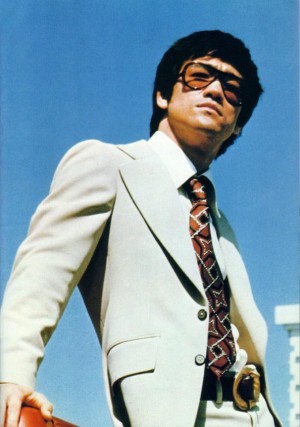 Bruce Lee was one of the first Asians to break into Hollywood. His martial arts and philosophy brought him to stardom in the 50's and 60's worldwide. However, since his death, Asians have always been associated with knowing martial arts in the media. This includes Jackie Chan, Jet Li, and even Lucy Liu, who started out as an actress and model, however for various roles in her career, has been associated as a character who knows martial arts. Her portrayal in Kill Bill, as O-Ren Ishii is an example of where she had to play a highly trained samurai/assassin.
Furthermore, into movies, Asians are often depicted as immigrants who have just arrived and know little-to no English, with a strong oriental accent. Also known as the 'ching chong' language. They normally work in Chinese restaurants, and the owner of the restaurant is also commonly a Triad leader. Triads, are also often stereotyped and sometimes exaggerated. In the blockbuster's Fast & Furious, and Rush Hour, we see how Triads are highly violent people, dressed in suits, carrying uzi's and samurai swords - which is incorrect since Triads are Chinese and samurai swords are Japanese.

Asian women are also seen as bad driver's and Western culture has publicised how Eastern Asians are consumers of meat considered taboo such as dog. However, novelist May Lee Chai stated that during her two year stay in China 'the only people she saw eating dog were a group of American students.'
Asides from all the negatives, Asians are often perceived as super smart, being really academic and excelling in maths and science. Jobs are normally Doctors, and Lawyers - with Asian parents being really strict on their children. YouTubers such as 'KevJumba', and 'RyanHiga', talk about their experiences as children and have gained a mass following in doing so. Asians are also seen as inferior in sports, with only two players in English top flight football being Asian. Jeremy Lin, the first Chinese player drafted in the NBA, also stated how teams overlooked him not due to skill but due to his race.
Overall, Asians are perceived as an inferior race in the
media with no recognizable change with the current stereotypes
currently associated. - I'm still waiting on an Asian Zombie.
Friday, 13 September 2013
Horror Film Sub-Genres
Below are a list of the different types of sub-genres within horror.
Comedy - Horror
Combines comedy with traditional horror.
Examples: Zombieland, Shaun of the Dead, Scary Movie
Slasher
Features a psychopathic killer stalking and killing his victims in a violent manner. Usually with a tool such as a knife or axe.
Examples: Friday the 13th, Scream, Nightmare on Elm Street
Supernatural - Horror
Horror films centered around the supernatural, which can include ghosts, demons, devils and the occult.
Examples: Final Destination, The Exorcist, Child's Play, The Ring, The Omen
Natural - Horror
Or 'eco-horror films' are films which centre around natural disasters which can be caused by human activity
Examples: An Inconvenient Truth, The 11th Hour, Flow: For Love of Water, 2012
Monster - Horror
Focuses on fictional creatures, where in most cases they are over-sized monsters.
Examples: Frakenstein, Jeepers Creepers, It, Predator, The Thing,
Action - Horror
This is a combination of the traditional conventions of horror, adapted with gun fights and chases that are normally associated to the action genre.
Examples: From Dusk Till Dawn, Blade, Dawn of the Dead
Body Horror
Horror which centres around the deconstruction of the human body and any abnormal biological errors. This can include disease, decay parasitism, mutilation or mutation. This can also include human body parts being used as limbs to create a monster.
Examples: Human Centipede, Teeth, Slither, Virus
Splatter Horror
Also known as 'torture porn' or 'gorno' due to the amount of graphic violence and sexual imagery usually combined. These films focus on the vulnerability of the human body and usually include a sadist.
Examples: SAW, Grotesque, Ichi the Killer, Hostel
Zombie Horror
Films which portrays human beings alive as the undead. These traditionally include a Zombie invasion, and usually centres around Zombies chasing after the alive in order to feast on human flesh.
Examples: 28 Days Later, Day of the Dead, I Am Legend, Resident Evil, Dead Snow
Comedy - Horror
Combines comedy with traditional horror.
Examples: Zombieland, Shaun of the Dead, Scary Movie
Slasher
Features a psychopathic killer stalking and killing his victims in a violent manner. Usually with a tool such as a knife or axe.
Examples: Friday the 13th, Scream, Nightmare on Elm Street
Supernatural - Horror
Horror films centered around the supernatural, which can include ghosts, demons, devils and the occult.
Examples: Final Destination, The Exorcist, Child's Play, The Ring, The Omen
Natural - Horror
Or 'eco-horror films' are films which centre around natural disasters which can be caused by human activity
Examples: An Inconvenient Truth, The 11th Hour, Flow: For Love of Water, 2012
Monster - Horror
Focuses on fictional creatures, where in most cases they are over-sized monsters.
Examples: Frakenstein, Jeepers Creepers, It, Predator, The Thing,
Action - Horror
This is a combination of the traditional conventions of horror, adapted with gun fights and chases that are normally associated to the action genre.
Examples: From Dusk Till Dawn, Blade, Dawn of the Dead
Body Horror
Horror which centres around the deconstruction of the human body and any abnormal biological errors. This can include disease, decay parasitism, mutilation or mutation. This can also include human body parts being used as limbs to create a monster.
Examples: Human Centipede, Teeth, Slither, Virus
Splatter Horror
Also known as 'torture porn' or 'gorno' due to the amount of graphic violence and sexual imagery usually combined. These films focus on the vulnerability of the human body and usually include a sadist.
Examples: SAW, Grotesque, Ichi the Killer, Hostel
Zombie Horror
Films which portrays human beings alive as the undead. These traditionally include a Zombie invasion, and usually centres around Zombies chasing after the alive in order to feast on human flesh.
Examples: 28 Days Later, Day of the Dead, I Am Legend, Resident Evil, Dead Snow
Thursday, 12 September 2013
3 Scariest Scenes
Below are three of the scariest scenes in horror history (in my opinion). Since the movies below all belong to different sub-genres of horror, I cannot categorize them in a specific order. So below is a list that is loosely based on storyline + shock.
Firstly a Thai film called Shutter.
Shutter (Thai) http://www.youtube.com/watch?v=qKVe_yVJkw0
Shutter is a Thai film which centres around a young photographer called Tun. Following an accident, which Tun and his girlfriend fled from, Tun starts to find mysterious shadows in his photographs. He soon realises that the victim was his weird ex-girlfriend who has come back to haunt him.
In the final scene of Shutter, following a series of suicides of those who have wronged Natre (Tun’s ex) Tun is convinced that he is next to die. Tun takes a series of Polaroid pictures of his apartment, in an attempt to find Natre. With no success, he throws his camera across the room out of frustration. With the camera on the floor, the camera goes off, taking a picture of Tun, revealing Natre on Tun’s shoulders.
The story overall is very well written, and seeing as I’m a keen photographer myself, this particular scene to me was the most shocking. When using a Polaroid camera, there is a wait you have to go through while the picture processes. Since seeing this scene, taking a Polaroid has never been the same for me – which is why it is number 3 on my list.
Insidious is a supernatural horror film, which focuses on a couple whose son’s spirit or soul is lost in another realm known as ‘the further’. This leaves his body as an empty vessel, free to be occupied by evil spirits or demons.
In the final scene of insidious, where all seems to be well – the family happily reunited with mellow music playing in the background – a change from tension for the first time in the film. During the time I first viewed this, I thought I could finally relax from the tension Insidious constantly has you under. However, in the living room, Elise (the ghosthunter) finds something strange about Dalton’s father. I find flashes scary, and in this scene, we see how the climax was associated with a camera flash. Again similar to how Shutter scared me.
Grotesque – A Japanese splatter-horror film, which desensitised me to SAW. Released in 2009, Grotesque brought the sub-genre splatter horror movies to another level. The story follows a sadistic doctor, who tortures a young couple for his own sexual stimulation.
In this scene, we see the doctor use a chainsaw to cut off his victim’s fingers. He then proceeds to make a necklace out of the fingers cut off, placing it on his partner’s neck. He similarly does the same to the girl; however, since she spoke out of turn, the doctor now has to ‘punish her’. The punishment results in him cutting off her nipples with scissors. This was only the first part of the torture in this scene. Further into the movie we go, the more of a test it becomes on how strong of a stomach we have. I chose this scene because it was the scene which made me realise how sick and twisted we human beings can be.
Subscribe to:
Posts (Atom)